The 2pm Slump Isn't What You Think — 3 Real Fixes
Quick Answer: The 2pm slump is usually two or three separate problems happening at once — a natural circadian dip, a post-lunch blood sugar swing, and dehydration — which is exactly why a single fix (more coffee) rarely solves it completely.
You blame lunch. Then you blame not sleeping enough. Then you blame just being ‘not a morning person, apparently, also not an afternoon person.’ The truth is it’s usually all three doing damage at the same time, which is why treating it as one problem never quite works.

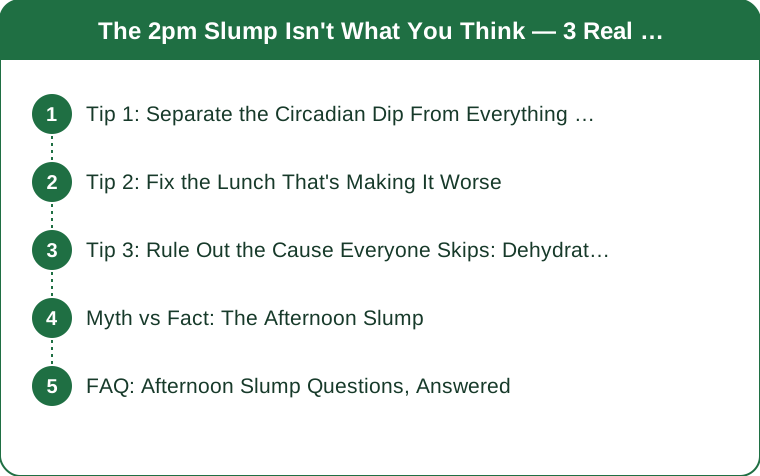
Tip 1: Separate the Circadian Dip From Everything Else
Your body has a built-in alertness low roughly 6-8 hours after waking, regardless of what you ate or how well you slept — this is a normal circadian feature, not a personal failing. Knowing this piece is structural (not something diet alone fixes) helps you stop chasing a food-only solution for a partly biological problem. This dip shows up consistently in body temperature and reaction-time studies, which is part of why it’s so predictable day to day.
Tip 2: Fix the Lunch That’s Making It Worse
A carb-heavy lunch causes a blood sugar spike and rebound dip about 60-90 minutes later, stacking directly on top of the circadian low. Swapping toward a protein-and-fiber-forward lunch — even just adding more protein to your usual order — measurably softens this second layer of the crash. A simple test: track how you feel after a heavier-carb lunch versus a lighter, protein-forward one for a week and compare the afternoons directly.

Tip 3: Rule Out the Cause Everyone Skips: Dehydration
Even mild dehydration (as little as 1-2% of body weight in fluid loss) has been shown to reduce concentration and increase perceived fatigue — symptoms nearly identical to the other two causes. Most people massively underestimate how much of their afternoon fog is simply not enough water since breakfast. Keeping a water bottle visible on your desk and refilling it at set checkpoints (mid-morning, right before lunch, mid-afternoon) tends to close this gap without needing to consciously think about it all day.
Myth vs Fact: The Afternoon Slump
Myth: More coffee is the fix. Fact: A second or third coffee in early afternoon often worsens the eventual crash and can disrupt nighttime sleep, compounding tomorrow’s slump.
Myth: The slump means you need more sleep tonight. Fact: Sleep debt makes it worse, but the circadian dip occurs in well-rested people too — it’s not purely a sleep problem.
Myth: A short walk is just a distraction, not an actual fix. Fact: A brisk 10-minute walk has measurable effects on alertness through blood flow and neurochemical changes, backed by real research, not just a mental break.
FAQ: Afternoon Slump Questions, Answered
How do I know which of the three causes is my main problem?
Track it for a week — if the slump is worse after heavier lunches, blood sugar is a bigger factor; if it’s the same regardless of food, the circadian dip and hydration are more likely the drivers.
Does a short nap help more than a walk?
Both work through different mechanisms — a 15-20 minute nap directly addresses sleep pressure, while a walk addresses alertness and circulation, so the better choice depends on which of the three causes is dominant for you.
Is the 2pm slump the same for everyone, or does it shift by person?
The general timing (6-8 hours post-waking) is consistent, but exact timing shifts with your personal wake time and chronotype, which is why some people feel it closer to 1pm and others closer to 3-4pm.
TL;DR:
- The 2pm slump is usually the circadian dip, a blood sugar swing, and dehydration stacked together
- A protein-forward lunch softens the blood sugar layer specifically
- Mild dehydration alone can cause fatigue symptoms nearly identical to the other causes
- A brisk 10-minute walk is a research-backed fix, not just a mental break
Treating the slump as three separate, stackable problems — not one mystery crash — is what actually makes the fixes work.
Keep Reading
This article is for general informational purposes only and is not medical advice. It is not a substitute for professional diagnosis or treatment. Always consult a qualified healthcare provider about your individual situation, especially before making significant changes to your diet or exercise routine.