Five Fixes for Legs and Feet That Swell by the End of a Desk Day
Quick Answer: Sitting still with your feet on the floor for hours lets fluid pool in the lower legs, because the calf muscle pump that normally pushes blood back up only works when you move. Five things fix most of it: calf pumps every hour, a foot position change, one genuine walk mid-afternoon, elevation in the evening, and looking at your sodium and hydration. New, one-sided, or painful swelling is a different matter and needs medical assessment.
This is one of the most common desk complaints and one of the least discussed, largely because it seems too minor to mention until the point where your shoes stop fitting.

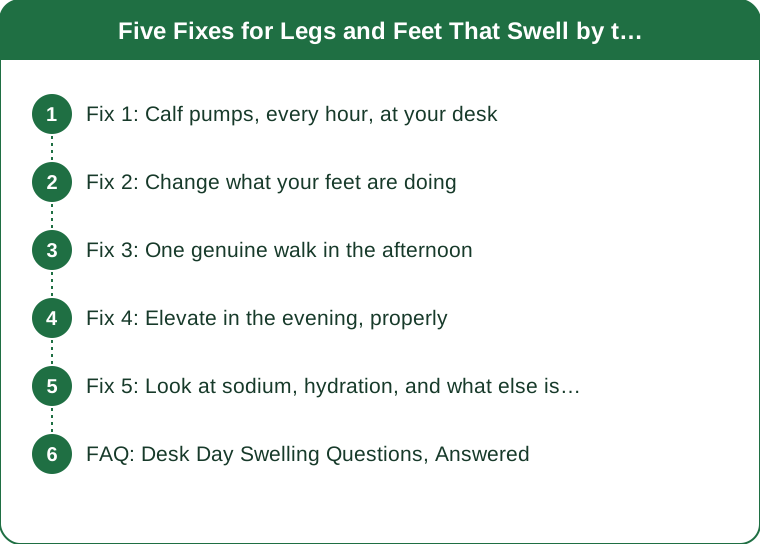
Fix 1: Calf pumps, every hour, at your desk
What to do: with your feet flat on the floor, lift both heels as high as you can, hold for a second, and lower. Twenty repetitions. Then lift the toes with the heels down, twenty more. Once an hour.
Why it works: the calf muscles are often described as the second heart, and it is not a metaphor. Veins in the legs have one-way valves, and blood moves upward against gravity largely because the calf muscles squeeze the veins as they contract. Sit still, and that pump stops entirely - the blood and fluid stay where gravity puts them.
Why it is first on the list: it directly addresses the mechanism, it takes forty seconds, it can be done during a call with nobody noticing, and it works immediately. Most other interventions are managing the consequence.
Making it happen: attach it to something that already occurs hourly - the top of the hour, a calendar alert, or every time you refill your water. An intention to remember does not survive a busy afternoon.
What you should notice: less tightness in the socks by mid-afternoon within the first few days. If nothing changes at all after a week of doing it properly, that is worth mentioning to a doctor rather than assuming it is normal.
Fix 2: Change what your feet are doing
What to do: get your feet flat on the floor with your thighs roughly parallel to it, and change position regularly. If your chair is too high, use a footrest - a box or a stack of books works.
Why the position matters: feet dangling with pressure on the back of the thighs compresses the veins at the point where blood is trying to return, which is close to the worst possible arrangement. Feet tucked under the chair for hours does something similar at the ankle.
The change that helps most: a footrest with a slight angle, or simply alternating between flat-on-floor and slightly elevated. Movement between positions matters more than any single perfect position, which is the general rule for everything about sitting.
On crossed legs: crossing at the knee compresses the veins behind the knee, and while it is unlikely to cause harm in itself, it does make pooling worse over hours. Crossing at the ankle is a gentler alternative if you find it hard to sit uncrossed.
On the chair edge: a chair seat that is too long presses into the back of your knees, which is a common and easily missed cause. You should be able to fit a couple of fingers between the seat edge and the back of your knee.
Fix 3: One genuine walk in the afternoon
What to do: ten to fifteen minutes of continuous walking somewhere between 2 and 4 PM. Not a trip to the printer - an actual walk.
Why the afternoon specifically: fluid accumulates through the day, so the intervention is most valuable when the accumulation has been going for several hours. A morning walk is good for other reasons; an afternoon one is what changes how your feet feel at 6 PM.
Why it beats several short breaks: the calf pump needs sustained rhythmic contraction to move a meaningful volume. Two minutes of standing does little. Ten minutes of walking moves fluid back up in a way that lasts into the evening.
Practical versions: take a call while walking, walk to get a coffee two streets further away than necessary, or get off transport one stop early on the way home - though the last one is later than ideal.
A secondary benefit worth noting: the same walk is one of the more effective things for the mid-afternoon focus drop, so it is doing two jobs. That makes it considerably easier to justify to yourself on a busy day.

Fix 4: Elevate in the evening, properly
What to do: lie down and get your feet above the level of your heart for 15 to 20 minutes. Feet on the sofa arm while lying on the sofa, or legs up against a wall while lying on the floor.
Why height matters: feet on a footstool while sitting upright is barely above hip level and does very little. The mechanism is gravity, so the feet need to be genuinely higher than the heart for it to work.
When to do it: early evening rather than immediately before bed. Elevating and then going straight to sleep can mean the fluid mobilised is processed overnight, which some people find leads to getting up in the night.
What to combine it with: ankle circles and calf pumps while elevated, which adds the muscle pump to gravity and works better than either alone.
On compression socks: graduated compression socks are genuinely effective for this, and they are no longer particularly medical-looking. They work by supporting the veins from outside so the valves function better. If swelling is a daily problem rather than an occasional one, they are worth trying, and worth asking a pharmacist or doctor about for the right compression level rather than guessing.
Fix 5: Look at sodium, hydration, and what else is going on
Sodium. High sodium intake causes the body to retain fluid, and the retained fluid follows gravity to your lower legs. Lunch is usually where this happens on a workday - sandwiches, soups, and anything from a shop tend to be high in salt. This is not about eliminating salt; it is about noticing whether the days your ankles swell most are the days you ate a particular kind of lunch.
Hydration. Counterintuitively, drinking too little makes retention worse rather than better. Adequate fluid intake helps the body regulate. Under-drinking is common at a desk and is easy to fix.
Heat. Blood vessels dilate in warm conditions, which increases pooling. Swelling is often worse in summer and in overheated offices, and it is one reason the problem seems to improve as the weather cools.
Medication. A number of common medications list fluid retention as a side effect, including some blood pressure medications, anti-inflammatories, and hormonal treatments. If the swelling began after a medication change, that is a specific and useful thing to raise with your doctor.
And know what is not normal. Swelling in one leg only, swelling with pain, redness, or warmth, sudden swelling, swelling with shortness of breath, or skin that stays indented when you press it should be assessed promptly rather than managed at a desk. One-sided swelling with calf pain in particular warrants same-day medical attention. Across all five of these fixes, the assumption is ordinary end-of-day puffiness in both legs that resolves overnight - anything outside that description belongs with a doctor. This is general information, not medical advice.
FAQ: Desk Day Swelling Questions, Answered
Why do my feet swell when I sit at a desk all day?
Because the calf muscle pump that returns blood up the legs only works when you move. Sitting still lets fluid pool in the lower legs under gravity, and it accumulates across the day, which is why shoes fit at 9 AM and not at 5 PM.
How do I stop my ankles swelling at work?
Do 20 calf raises at your desk every hour, keep your feet flat with your thighs parallel to the floor, take one genuine ten-minute walk mid-afternoon, and elevate your legs above heart level for 15 minutes in the evening. Watch high-sodium lunches and drink enough water.
Do compression socks actually work for desk workers?
Yes, graduated compression supports the vein walls so the valves work more effectively, and it is genuinely effective for daily swelling. Ask a pharmacist or doctor about the appropriate compression level rather than choosing at random.
When is swollen legs a medical problem?
Swelling in one leg only, swelling with pain, redness or warmth, sudden onset, swelling with breathlessness, or skin that stays indented when pressed all need medical assessment. One-sided swelling with calf pain should be seen the same day.
TL;DR:
- Sitting still switches off the calf muscle pump, and fluid pools under gravity across the day.
- Twenty calf raises every hour is the highest-return fix and takes forty seconds.
- Get your feet flat with thighs parallel to the floor, and change position often.
- One genuine ten-minute walk mid-afternoon beats several two-minute standing breaks.
- Elevate feet above heart level for 15 minutes in the early evening, not just onto a footstool.
- Watch high-sodium lunches, drink enough, and check whether a new medication is involved.
- One-sided swelling, pain, redness, or breathlessness needs a doctor, not a desk fix.
Set an hourly reminder tomorrow and do the calf raises. You will know within three days whether it is your answer.
Keep Reading
This article is for general informational purposes only and is not medical advice. It is not a substitute for professional diagnosis or treatment. Always consult a qualified healthcare provider about your individual situation, especially before making significant changes to your diet or exercise routine.