Five Two-Minute Resets for a Day That Does Not Leave the Desk
Quick Answer: The single most useful thing is frequency, not duration - regularly interrupting sitting matters more than any specific stretch. Five resets below, each around two minutes, each targeting a different consequence of a long seated day: hip position, upper back and chest, neck and shoulder, eyes, and circulation. Do two or three across a day and you have addressed most of what sitting does.
You were going to go for a walk at lunch. Then the twelve o’clock ran over into the one o’clock, and it is now dark outside.

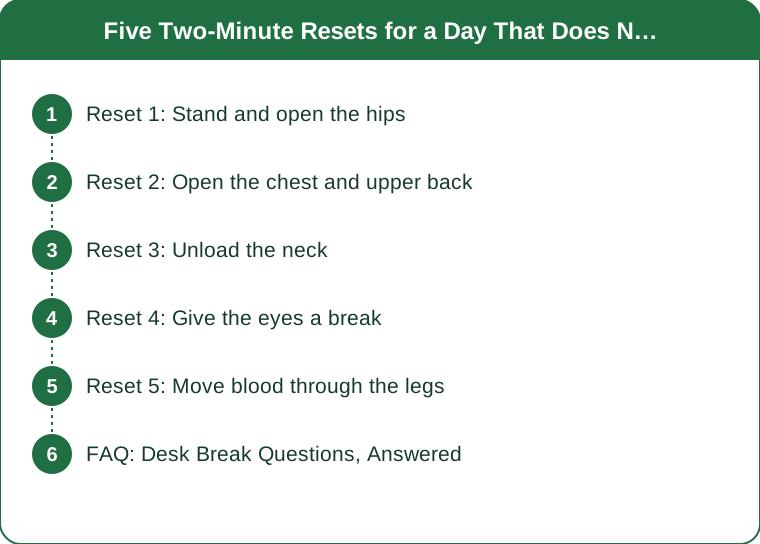
Reset 1: Stand and open the hips
Hip flexors sit in a shortened position for every hour you are in a chair, and that shortening is much of why standing up after a long stretch of sitting feels stiff and why lower backs complain by late afternoon.
Do this: stand, step one foot back into a lunge stance without dropping deep, squeeze the glute on the back leg, and hold for thirty seconds each side. The glute squeeze is what makes this work - without it, you stretch the front of the hip passively and change little.
Add ten slow hip hinges. Hands on the hips, push the hips back, keep the back flat, return. This reminds the body of a movement pattern it has not used all day and gently loads the posterior chain.
Why it matters more than it sounds: the hip flexor and glute relationship is central to how the lower back is loaded, and a couple of minutes of active work several times a day addresses it far better than one long stretch at the end.
Timing: best mid-morning and mid-afternoon, and best immediately after a long meeting rather than before one.
And do it standing at the desk rather than finding a private space - the reset that requires going somewhere is the reset that does not happen.
Reset 2: Open the chest and upper back
Hours at a keyboard round the shoulders forward and hold the upper back in flexion, which is the source of the mid-back ache and the tight-chest feeling that builds through the afternoon.
Do this: interlace your hands behind your back, straighten the arms, lift the chest, and hold for twenty to thirty seconds. Then reach both arms overhead and lean gently to each side for fifteen seconds.
Add ten shoulder blade squeezes. Pull the shoulder blades together and down, hold for two seconds, release. This activates the muscles between the shoulder blades that switch off during long typing sessions.
A doorway version works well if one is nearby: forearm on the frame at shoulder height, step through gently, thirty seconds each side.
Why it matters: the upper back and chest are where most desk-related discomfort is felt, and unlike the hips, this area responds quickly - people frequently notice a difference in the same session.
And breathe deeply while you do it. A rounded posture restricts the ribcage, and three or four full breaths in an open position is part of why this reset feels disproportionately good.
Reset 3: Unload the neck
The head weighs a substantial amount and the load on the neck increases considerably as it moves forward, which is what a screen and a phone both encourage across a day.
Do this: sit or stand tall, tuck the chin gently backward - creating a double chin rather than looking down - and hold for five seconds. Repeat ten times. This is the single most useful neck exercise for desk workers and it looks faintly ridiculous, which is why nobody does it.
Then slow neck rotations: turn to look over each shoulder, five each side, holding briefly at the end. No forcing, no rolling the head backward in a full circle.
Add a levator scapulae stretch: turn the head forty-five degrees, look down toward the armpit, gentle pressure with the hand, twenty seconds each side. This targets the specific spot most people point to when they say their neck hurts.
Raise the screen while you are up. Most neck load at a desk comes from a monitor sitting too low, and the top of the screen should be at roughly eye level. A stack of books is a legitimate solution.
And if neck pain radiates into the arm, comes with numbness or tingling, or is severe, see a physiotherapist or doctor rather than stretching it. This is general information, not medical advice.

Reset 4: Give the eyes a break
Blink rate drops substantially during concentrated screen work, which dries the eye surface and is a major contributor to the tired, gritty feeling by late afternoon - particularly once heating dries the air.
Do this: look at something at least twenty feet away for twenty seconds. The widely cited version of this suggests doing it roughly every twenty minutes, and even doing it twice a day is better than not at all. Out of a window is ideal, because it also provides daylight.
Blink deliberately, twenty times, slowly and fully. Full closures rather than the partial ones that happen during screen work.
Palm the eyes for thirty seconds. Cup the hands over closed eyes without pressing, and let them rest in the dark. It is a small thing and the relief is immediate.
Combine it with a window if you possibly can. Daylight exposure in the early afternoon helps alertness considerably, which means this two-minute reset delivers two separate benefits.
And check the room lighting. Working on a bright screen in a dim room increases eye strain, and autumn afternoons get dim without anyone noticing to turn a lamp on.
Reset 5: Move blood through the legs
Sitting switches off the calf muscle pump, which is what helps return blood from the lower legs. That is why ankles swell and legs feel heavy by the end of a seated day.
Do this: thirty calf raises, standing, slowly. Up for two seconds, down for two. This is the most efficient possible use of a minute for lower-leg circulation.
Then twenty march-in-place steps with real knee height, which raises the heart rate slightly and re-engages the hip flexors actively rather than passively.
Finish with ten bodyweight squats to your chair. Sit down lightly, stand up, repeat. It loads the legs, resets posture, and takes forty seconds.
Prolonged uninterrupted sitting is associated with health risks independent of how much you exercise otherwise, and the evidence points toward breaking up sitting frequently rather than compensating with one gym session.
Set an alarm, because you will not remember. The reset that depends on noticing is the reset that happens twice and then stops - and two or three of these across a day is a genuinely different day for your body than none.
And if you have any leg swelling that is new, one-sided, painful, or accompanied by warmth or redness, see a doctor promptly rather than treating it as a desk problem. This is general information, not medical advice.
FAQ: Desk Break Questions, Answered
How often should I get up from my desk?
Frequency matters more than duration - regularly interrupting sitting appears more useful than one long break. Every thirty to sixty minutes is a common recommendation, and even two or three deliberate two-minute resets across a day is meaningfully better than none.
What is the best stretch for desk-related back pain?
A standing hip flexor stretch with an active glute squeeze on the back leg, followed by ten slow hip hinges. Hip flexors shorten while you sit and glutes switch off, and that relationship affects how the lower back is loaded far more than any direct back stretch.
How do I stop my eyes feeling tired from screens?
Look at something at least twenty feet away for twenty seconds, roughly every twenty minutes, and blink deliberately and fully twenty times. Blink rate drops sharply during screen work, and heated indoor air makes the drying worse. Do it at a window and you get daylight too.
Do short movement breaks really make a difference?
Prolonged uninterrupted sitting is associated with health risks independently of how much you exercise otherwise, which suggests breaking up the sitting itself matters. Short frequent interruptions are the practical version of that, and they are also the ones that survive a busy calendar.
TL;DR:
- Frequency beats duration - interrupting sitting matters more than any particular stretch.
- Reset 1: standing hip flexor stretch with an active glute squeeze, plus ten hip hinges.
- Reset 2: hands interlaced behind the back, chest lifted, plus ten shoulder blade squeezes.
- Reset 3: ten chin tucks and a levator scapulae stretch - and raise the monitor to eye level while you are up.
- Reset 4: look twenty feet away for twenty seconds and blink fully twenty times, ideally at a window.
- Reset 5: thirty slow calf raises, marching, and ten chair squats to restart the calf pump.
- Set an alarm. The break that depends on remembering does not happen.
New, one-sided, or painful leg swelling is a doctor’s question. This is general information, not medical advice.
Keep Reading
This article is for general informational purposes only and is not medical advice. It is not a substitute for professional diagnosis or treatment. Always consult a qualified healthcare provider about your individual situation, especially before making significant changes to your diet or exercise routine.