Cold Plunging: What It Actually Does and Where the Hype Outpaces the Evidence
Quick Answer: Cold plunging has solid evidence for improving mood and perceived recovery in the short term, moderate evidence for reducing exercise-induced muscle soreness, and weaker or mixed evidence for the more dramatic claims (metabolism boosting, major immune system changes) that drive most social media hype.
Cold plunging has gone from niche recovery tool to mainstream wellness trend fast, and the claims attached to it have outpaced what the actual research supports in several areas.

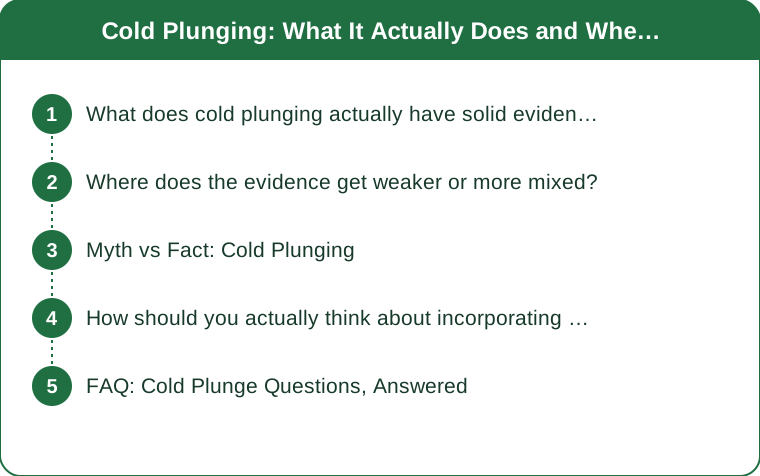
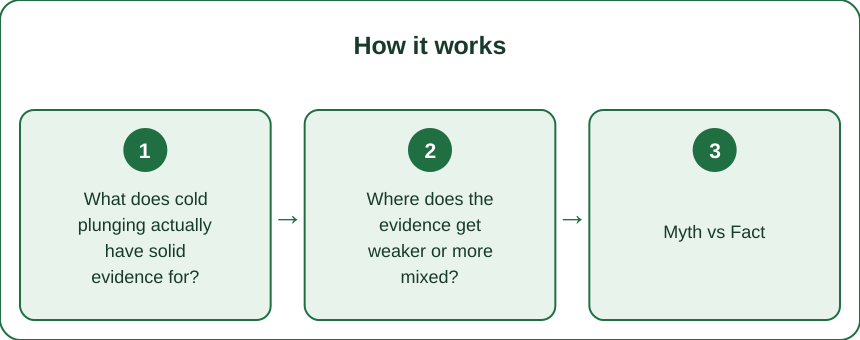
What does cold plunging actually have solid evidence for?
Mood elevation and subjective alertness immediately after cold exposure has fairly consistent research support, linked to a genuine spike in norepinephrine and dopamine from the cold stress response.
Reduced perceived muscle soreness after intense exercise also has reasonable evidence, though the effect on actual muscle damage markers (versus just how sore you feel) is less consistently supported.
Where does the evidence get weaker or more mixed?
Claims about significant metabolism boosting or major fat loss from cold exposure are not well supported at the exposure durations and temperatures typical of at-home cold plunging — the metabolic effect is real but generally small relative to the claims made about it.
Major immune system enhancement claims are also weaker than popular framing suggests — some studies show modest immune marker changes, but ‘boosts your immune system’ as commonly claimed oversimplifies genuinely mixed research.

Myth vs Fact: Cold Plunging
Myth: Cold plunging significantly boosts your metabolism for fat loss. Fact: Any metabolic effect from typical cold plunge protocols is modest, not the dramatic fat-burning claim often attached to it.
Myth: Cold plunging after strength training helps you build more muscle. Fact: Some research actually suggests cold exposure immediately post-strength-training may blunt certain muscle-building signaling pathways — timing it separately from strength sessions may be preferable if hypertrophy is a goal.
Myth: Longer and colder is always better. Fact: Most research protocols use relatively brief exposures (2-5 minutes); pushing much longer or colder doesn’t have evidence of proportionally greater benefit and increases risk.
How should you actually think about incorporating it?
If your primary goal is mood, alertness, or subjective post-exercise recovery feel, cold plunging has reasonable evidence to support trying it as one tool among several.
If your goal is specifically muscle building, consider separating cold exposure from strength training sessions by several hours based on the research suggesting it may interfere with muscle-building signaling when done immediately after.
FAQ: Cold Plunge Questions, Answered
How long should a cold plunge session actually be?
Most research protocols use 2-5 minute exposures — longer durations don’t have strong evidence of additional benefit and increase risk, especially for beginners.
Is cold plunging safe for everyone?
No — people with cardiovascular conditions should consult a doctor first, since the cold shock response causes a significant, sudden cardiovascular stress response.
Should I cold plunge before or after a workout?
After is more common in research protocols; doing it immediately after strength training specifically may reduce muscle-building signaling, so separating timing is worth considering if hypertrophy is a priority. This is general information, not medical advice.
TL;DR:
- Mood elevation and perceived recovery have the strongest evidence behind cold plunging
- Metabolism-boosting and major immune claims are weaker than popular hype suggests
- Cold exposure right after strength training may blunt some muscle-building signaling
- Most supported protocols use brief 2-5 minute exposures, not longer or colder
This is general information, not medical advice — check with a doctor first if you have cardiovascular conditions.
Keep Reading
This article is for general informational purposes only and is not medical advice. It is not a substitute for professional diagnosis or treatment. Always consult a qualified healthcare provider about your individual situation, especially before making significant changes to your diet or exercise routine.