Why You're Bloated Every Evening — and 5 Simple Fixes

Quick Answer: Evening bloating almost always comes from a full day of eating, drinking, and swallowed air adding up in your digestive system — it’s math, not a mystery. Slow down at meals, take a short walk after dinner, hydrate through the day, and ease off late salt, and you’ll usually feel noticeably better by bedtime.
You wake up flat and by 8pm you look three months along, and you didn’t even eat that much. If your bloating runs on a nightly schedule, you’re not imagining it, and you’re definitely not alone — it’s one of the most common, least talked-about parts of a normal day.
Why does bloating get worse at night?
It’s simple math, really: bloating accumulates over the day. Every meal, snack, sip, and swallowed bit of air adds up, and your digestive system is still working through all of it by evening.
Morning you is essentially “empty.” Evening you is running on a full day’s input. That difference alone explains most of the flat-morning, puffy-night pattern — no hidden condition required.
It’s easy to panic and assume something’s wrong when your stomach looks different at 8pm than it did at 8am, but that comparison was never fair to begin with. You’re comparing an empty system to one that’s processed three meals, a couple of snacks, and probably a fizzy drink or two. Once you see it as simple accumulation rather than a mystery symptom, the fixes below make a lot more sense.
What are the best fixes for evening bloating?
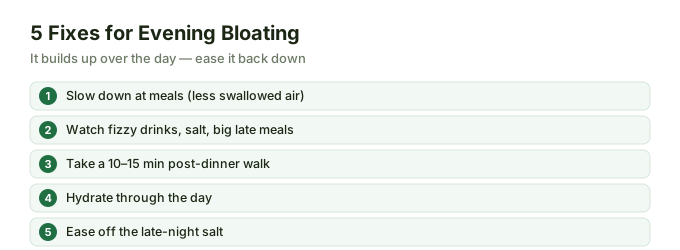
Five small changes handle most of it:
- Slow down at meals. Eating fast means swallowing air — a top bloat culprit. Chew, pause, breathe between bites. Your gut can’t keep up with inhaling lunch in four minutes flat.
- Watch the usual suspects. Carbonated drinks, salty foods, and oversized portions late in the day are common triggers. Track your own patterns for a week before blaming any single food group.
- Take a post-dinner walk. A gentle 10-15 minute walk after eating genuinely helps digestion move along. Think of it as nature’s anti-bloat pill, and it’s free.
- Hydrate — yes, really. It feels backwards to drink more water when you’re puffy, but water helps flush the sodium that makes you retain and swell. Sip steadily through the day instead of chugging a glass at dinner.
- Ease off the late salt. That salty evening snack doesn’t just bloat you tonight — it shows up as next-morning puffiness too. Go lighter after dark.
Mistakes everyone makes with evening bloating
“Mistakes Everyone Makes”
- Eating on autopilot, fast. Scrolling your phone while inhaling dinner means you’re swallowing far more air than you realize.
- Blaming “everything” instead of tracking patterns. Cutting out entire food groups without noticing your actual triggers — usually carbonation, salt, or portion size — wastes effort on the wrong fix.
- Skipping the after-dinner walk. Sitting straight down (or lying down) after eating is comfortable in the moment and counterproductive for digestion.
- Drinking less water because you feel puffy. This is exactly backwards — under-hydrating makes your body hold onto sodium harder, not less.
- Loading up on salt at night “since the day is basically over.” That’s the mistake that quietly undoes everything else on this list, and it’s the one people notice last.
When should you see a doctor about evening bloating?
Occasional evening bloat is normal — genuinely nothing to worry about. But if it’s constant, painful, or paired with other changes (unexplained weight change, appetite shifts, digestive symptoms that don’t match your usual pattern), it’s worth a conversation with your doctor. This article covers everyday, garden-variety bloating, not a diagnosis — your body’s allowed to send signals worth checking out.
There’s no shame in bringing this up at a checkup, even if it feels minor. Doctors hear “I’m bloated by evening” constantly, and for most people the answer really is one or two of the fixes above. But you know your own patterns better than anyone else does, so trust that instinct if something feels off beyond the usual end-of-day puffiness.

Mini FAQ
Why am I bloated every night but fine in the morning?
Because bloating builds up across the day from everything you eat, drink, and swallow, while your morning body has had all night to process and reset. By evening, your digestive system is simply carrying a full day’s load.
How long should I walk after dinner to help with bloating?
A gentle 10-15 minutes is enough to help digestion move along. It doesn’t need to be a workout — a relaxed stroll around the block does the job.
Does drinking more water help with bloating?
Yes, counterintuitively. Water helps flush excess sodium, which is often what’s making you retain fluid and feel puffy in the first place. Sip throughout the day rather than all at once.
TL;DR
- Evening bloat is usually just a full day of eating and drinking catching up with you — not a red flag on its own.
- Slow down at meals to swallow less air.
- Take a 10-15 minute walk after dinner.
- Hydrate steadily all day, not just at dinner.
- Go lighter on salt after dark.
- See a doctor if bloating is constant, painful, or comes with other changes.
Keep Reading
This article is for general informational purposes only and is not medical advice. It is not a substitute for professional diagnosis or treatment. Always consult a qualified healthcare provider about your individual situation, especially before making significant changes to your diet or exercise routine.