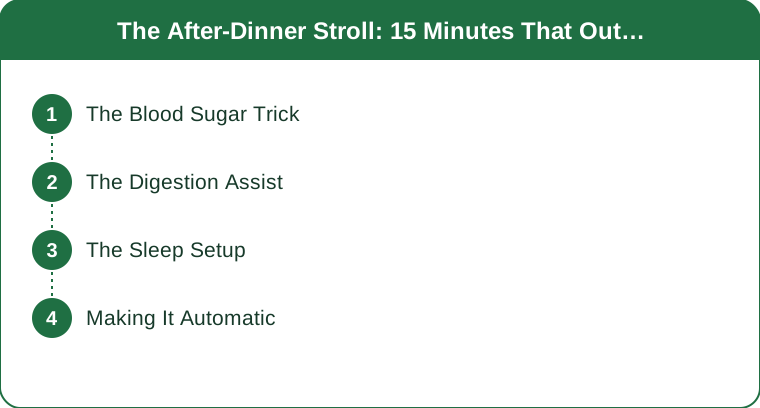
The After-Dinner Stroll: 15 Minutes That Outwork Your Supplements
Quick Answer: A 15-minute walk after dinner helps flatten the blood sugar spike from your meal, eases digestion and bloating, and sets up a calmer wind-down for sleep — and it costs nothing but the time and a pair of shoes you already own.
The dishes are still on the table. The couch is calling. And somewhere between the last bite and the first Netflix episode, there’s a fifteen-minute window most of us skip without a second thought.
That window happens to be one of the most underrated habits in wellness — not because it’s exotic, but because it’s almost suspiciously ordinary. Your great-grandparents did it without a name for it.

Why does walking after dinner help with blood sugar?
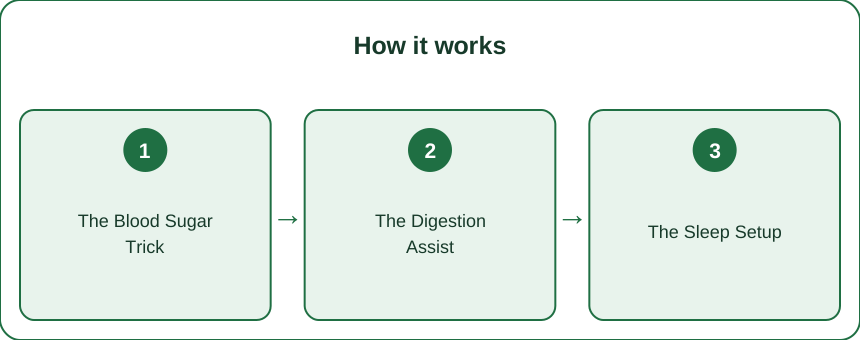
When you move, your muscles pull glucose out of your bloodstream directly to use as fuel — no digestion required, no waiting on insulin to do all the work alone. That means a walk taken shortly after eating can measurably flatten the blood sugar spike that follows a meal, compared to sitting still on the couch for the same fifteen minutes.
You don’t need a treadmill or a structured workout for this to count. A relaxed, unhurried pace around the block does the job — it’s the cheapest metabolic upgrade available, and it starts the second you step out your front door. If you’re managing a condition like diabetes or prediabetes, it’s still worth looping your doctor in on timing and pace, since individual responses to post-meal movement can vary.
Does walking after eating actually help digestion?
Gentle movement encourages digestion to keep moving too, which is a big part of why an after-dinner walk tends to leave you feeling lighter than parking on the couch does. Less bloat, less of that heavy “I ate a brick” feeling — the walk isn’t doing anything mysterious, it’s just giving your body a nudge instead of asking it to digest at a dead stop.
This isn’t a new discovery, either. Grandmothers across a huge range of cultures have prescribed the after-dinner stroll for generations, long before anyone ran a study on it. The research eventually caught up to what the after-dinner walk crowd already knew.

How does an evening walk improve sleep?
A short walk after dinner quietly checks three boxes that matter for winding down: evening light that’s naturally fading, movement that’s calming rather than stimulating, and a phone that’s finally back in your pocket instead of your hand. None of that sounds revolutionary written out, but combined, it functions like a built-in transition ritual between “day” and “bedtime.”
- Fading natural light in the evening supports your body’s normal wind-down signals.
- Low-intensity movement (as opposed to an intense workout) tends to relax rather than energize.
- Stepping away from screens for fifteen minutes gives your mind a break it doesn’t usually get.
Twenty minutes or so after you’re back, bed tends to sound like a genuinely good idea rather than an obligation.
What Nobody Tells You About Making This Habit Actually Stick
Everyone knows walking is “good for you.” What nobody mentions is that the habit lives or dies on friction, not motivation.
- Anchor it to something automatic. Fork goes down, shoes go on, same loop every time — habits attach far more easily to an existing routine than to willpower alone.
- Recruit backup. Bring a partner, a kid, or the dog, who — let’s be honest — has probably been lobbying for this walk long before you started reading about its benefits.
- Have a rain plan. A couple of songs’ worth of walking around indoors, up and down a hallway or stairs, still counts on the nights the weather doesn’t cooperate.
- The streak matters more than the mileage. Fifteen easy minutes done consistently beats an ambitious 45-minute walk you only manage twice a month.
The goal isn’t turning this into a workout. It’s making it boring enough, in the best sense, that skipping it feels weirder than doing it.
FAQ: After-Dinner Walks
How soon after eating should I go for a walk?
Heading out within roughly 15 to 30 minutes after finishing a meal is a reasonable window for catching the blood sugar and digestion benefits, though even a slightly later walk is better than skipping it entirely.
Does the walk need to be fast to count?
No — an easy, relaxed pace is enough to get muscles pulling glucose from your bloodstream and to support digestion; you’re aiming for gentle movement, not a cardio session.
What if it’s raining or too cold to go outside?
A short indoor walk, even just pacing a hallway or doing a few laps around your living space for the length of a couple of songs, still delivers the core benefit of getting your body moving after a meal.
TL;DR:
- A 15-minute after-dinner walk helps flatten the post-meal blood sugar spike because moving muscles pull glucose from the bloodstream directly.
- Gentle movement also eases digestion, cutting down on bloat and that heavy post-meal feeling.
- The walk doubles as a wind-down ritual for sleep: fading light, calm movement, and phone-free time.
- Anchor the habit to something automatic (right after the last bite), and keep a simple indoor rain plan.
- Consistency matters more than distance or speed — an easy nightly loop beats an occasional long walk.
Keep Reading
This article is for general informational purposes only and is not medical advice. It is not a substitute for professional diagnosis or treatment. Always consult a qualified healthcare provider about your individual situation, especially before making significant changes to your diet or exercise routine.