5 Desk-Day Energy Resets That Actually Work (Not Just 'Drink More Water')
Quick Answer: A 2-minute posture reset, a brief burst of bright light exposure, and standing up during phone calls are three underrated energy resets that address circulation and alertness more directly than generic ‘drink water’ advice — all doable without leaving your desk.
Most desk-day energy advice repeats the same three tips (water, snacks, walk around) without addressing why energy actually crashes at a desk in the first place — poor circulation, low light exposure, and hours of static posture.
Reset 1: The 2-Minute Posture Unwind
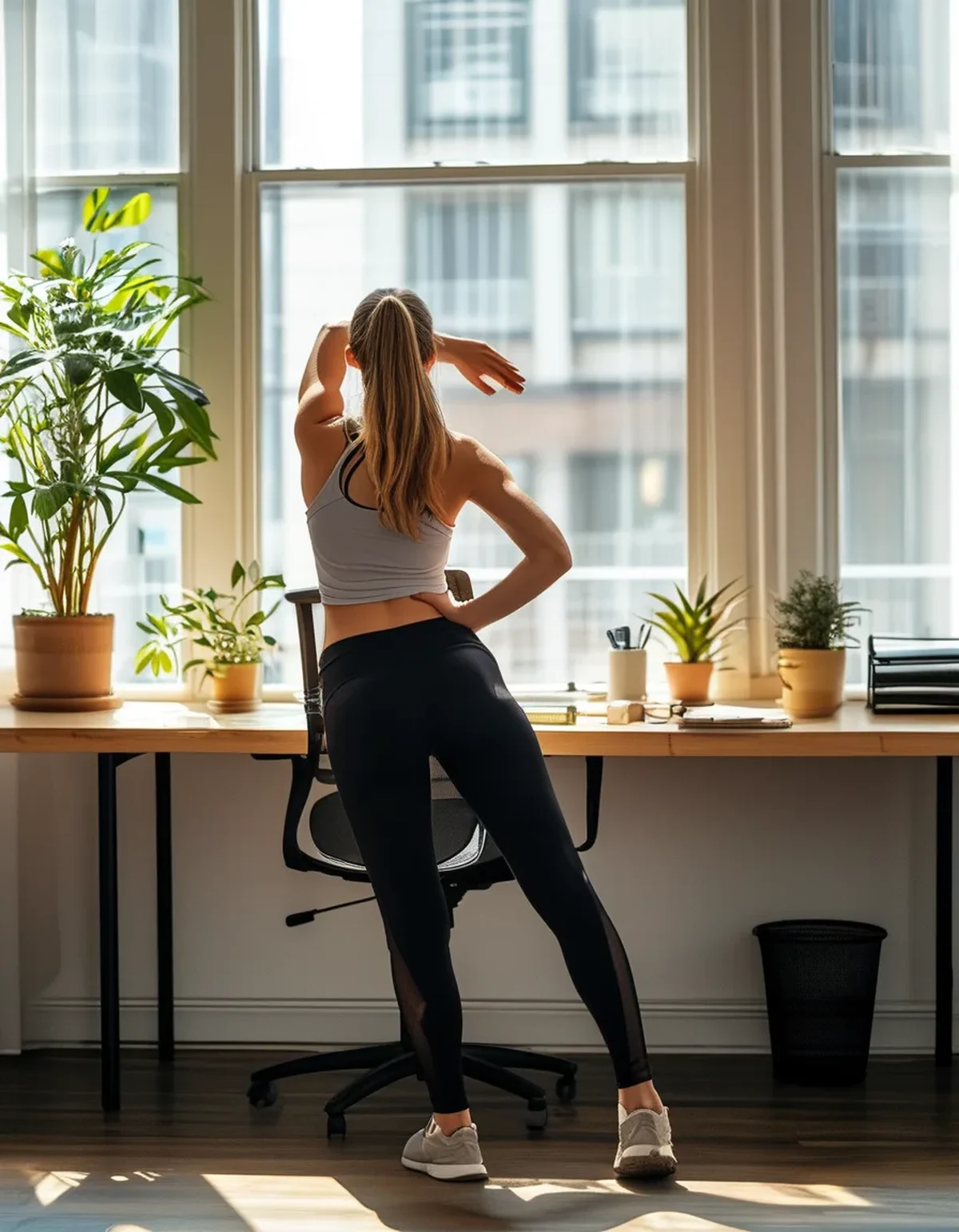
Hours of forward-hunched sitting compress the chest and shorten hip flexors, both of which subtly restrict breathing capacity and blood flow. A 2-minute reset — standing, rolling shoulders back, opening the chest, and a gentle standing backbend — restores fuller breathing capacity almost immediately, which has a direct effect on alertness.
Reset 2: A Burst of Bright Light Exposure
Dim, artificial office lighting doesn’t stimulate the same alertness response as bright light, particularly natural daylight. Stepping near a window or briefly outside for 2-3 minutes during an energy dip provides a light-exposure signal that can measurably shift alertness, especially during the early-afternoon slump window.
Reset 3: Standing During Phone Calls
Standing up for calls (rather than staying seated) increases circulation and can measurably improve vocal energy and alertness during the conversation itself, turning an unavoidable daily task into a built-in movement break without needing to schedule separate time for it.

Reset 4: A Cold Water Splash or Cool Compress
A brief cold stimulus to the face or wrists triggers a mild alertness response through the nervous system, offering a faster reset than another cup of coffee for a genuine dip rather than baseline tiredness.
Reset 5: A 90-Second Walk Away From the Screen (Not Just a Break From Work)
The key detail here is walking specifically away from the screen, not just pausing to scroll a phone — visual rest from a screen, combined with brief movement, resets both eye strain and circulation simultaneously in a way that a break spent looking at a different screen doesn’t.
FAQ: Desk Energy Reset Questions, Answered
How often should I do these resets during a workday?
Once every 60-90 minutes is a reasonable target for most desk jobs, timed around natural pauses rather than rigidly scheduled.
Do these resets replace the need for actual exercise?
No — they address short-term alertness dips, not the separate need for regular structured exercise across the week.
Which reset works best for the early-afternoon slump specifically?
The bright light exposure reset tends to be most effective for the early-afternoon dip specifically, since natural light exposure has a documented effect on circadian alertness patterns.
TL;DR:
- A 2-minute posture unwind restores fuller breathing capacity, directly affecting alertness
- Bright light exposure (even briefly) addresses the early-afternoon slump more directly than caffeine
- Standing during calls and a screen-free 90-second walk both build movement into unavoidable daily tasks
- These resets support short-term alertness, not a replacement for regular exercise across the week
Pick one reset to try during tomorrow’s afternoon slump instead of reaching for the same coffee refill.
Keep Reading
This article is for general informational purposes only and is not medical advice. It is not a substitute for professional diagnosis or treatment. Always consult a qualified healthcare provider about your individual situation, especially before making significant changes to your diet or exercise routine.