5 Desk Resets That Undo a Long Day of Sitting
Quick Answer: Sitting shortens the hip flexors, stiffens the mid-back into flexion, weakens the glutes through disuse, compresses the ribcage, and loads the neck with a forward head position. Five resets address each in turn - a couch-stretch variant at the desk, a seated thoracic rotation, a standing glute squeeze series, a doorway rib opener, and a chin-tuck reset. Ninety seconds each, ideally spaced through the day rather than done together at 6pm.
Below, one reset per problem. Do them in the order listed if you are doing them together, or pick the one matching whatever is bothering you today.

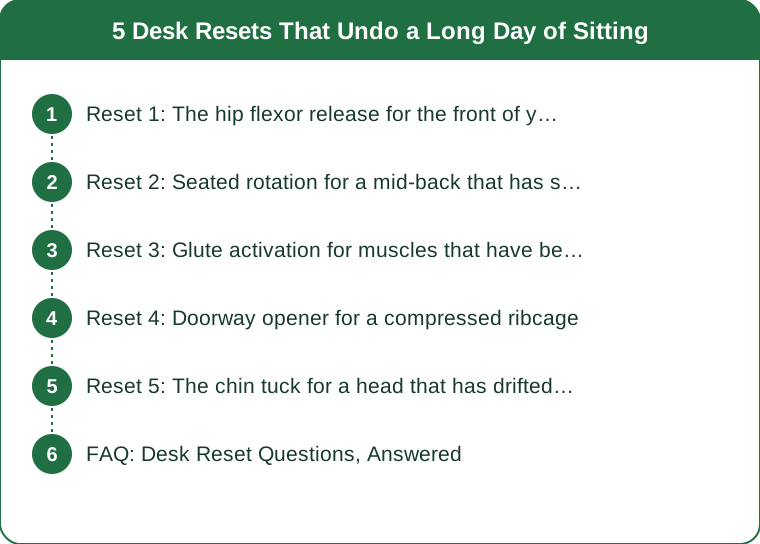
Reset 1: The hip flexor release for the front of your hips
What sitting did: Eight hours with your hips at 90 degrees leaves the hip flexors in a shortened position for most of the working day. They adapt to that length, and then you stand up and your pelvis tilts forward slightly to accommodate them - which is a large part of why the front of the hip feels tight and the low back feels compressed after a long day.
The reset: Stand facing away from your chair. Place the top of one foot on the seat behind you, standing tall on the other leg with a hand on the desk for balance. Now tuck your pelvis under - squeeze the glute on the stretching side and bring your tailbone down. That tuck is the whole exercise. Without it, you are just bending your knee.
Hold 45 seconds each side, breathing normally. You should feel it across the front of the hip and upper thigh, not in the knee or low back.
If the chair is too high, do the same thing in a half-kneeling position on the floor, or simply stand in a long split stance and tuck the pelvis while squeezing the back glute. The pelvic tuck is the non-negotiable part; the position is flexible.
Why this one goes first: everything else moves better once the front of the hip has let go. Do it before the glute work in particular - a shortened hip flexor actively inhibits the glute on the same side.
Reset 2: Seated rotation for a mid-back that has stopped moving
What sitting did: The thoracic spine spends the day in flexion, and it loses rotation before it loses anything else. Rotation is the movement you need for reaching, turning, and - relevant to the rest of your body - for the shoulder to move freely, since a stiff mid-back forces the shoulder joint to compensate.
The reset: Sit tall, feet flat, knees together. Cross your arms over your chest with hands on opposite shoulders. Keeping your hips absolutely square and your knees locked together, rotate your upper body to one side as far as it goes comfortably, then take a breath in, and on the exhale rotate a little further. Hold three seconds. Return to centre slowly. Repeat five times each side.
The knees-together detail is what makes this work. Let the hips rotate and you get movement without ever reaching the mid-back.
Add the reach: on the last repetition each side, extend the top arm through and past you at chest height, following it with your eyes. This adds a shoulder blade glide that most desk workers have not done all day.
Ninety seconds total. This is the reset most people notice immediately - the second rotation reaches noticeably further than the first, and that difference is the range you had lost since morning.
Reset 3: Glute activation for muscles that have been switched off
What sitting did: Glutes under a chair for eight hours are not just resting - they get progressively less responsive, and the surrounding muscles take on their work. The consequence shows up as low back tightness and a hamstring that feels perpetually short, because both are covering for a glute that is not contributing.
The reset: Stand behind your chair with hands lightly on the back.
- Ten standing glute squeezes - feet hip width, squeeze both glutes hard for two seconds, release. Deliberate and slow.
- Ten hip extensions each side - keeping the leg straight and the torso upright, draw one leg straight back about 20 to 30 centimetres, squeezing the glute at the end. Do not lean forward; the range is small and the squeeze is the point.
- Ten lateral steps each direction - small side steps with tension through the outer hip, or against a band if you keep one in a drawer.
Total: about 90 seconds. It looks like very little and it is the most consistently useful of the five, because it is the only one restoring a muscle rather than lengthening one.
The tell that it worked: stand up from your next stretch of sitting and notice whether the first few steps feel less stiff. That is the glute participating again.

Reset 4: Doorway opener for a compressed ribcage
What sitting did: Rounded forward at a screen, the ribcage drops toward the pelvis and the chest muscles shorten. This limits how far your shoulder can move overhead, and it restricts how far your diaphragm can descend - which is why breathing gets shallower as the day goes on.
The reset: Stand in a doorway. Place one forearm flat against the frame, elbow at about shoulder height. Step through gently with the same-side foot until you feel a stretch across the front of the chest. Keep your ribs down - do not arch your low back to get further.
Hold 30 seconds, then move the elbow higher by about 15 centimetres and hold 30 more. The two heights hit different fibres of the chest.
Then the breathing half, which is the part people skip: stand tall, hands on your lower ribs, and take five breaths where you feel your lower ribs widen sideways into your hands rather than your chest lifting. Long exhale, roughly twice as long as the inhale.
Total: around 90 seconds per side including the breathing. If you only have time for one reset all day and you have been on calls, make it this one - the combination of chest opening and lateral breathing addresses both the mechanical and the respiratory side of a long seated day.
Reset 5: The chin tuck for a head that has drifted forward
What sitting did: Screens pull the head forward. Every centimetre of forward head position multiplies the load the neck extensors carry, and they respond by becoming both tight and fatigued. This is the source of most end-of-day tension headaches from desk work.
The reset: Sit or stand tall. Without tipping your head down, glide your head straight backward, as if making a double chin. You should feel a stretch at the base of the skull and gentle work at the front of the neck. Hold five seconds, release. Ten repetitions.
The common error is nodding down instead of gliding back. Put a finger on your chin and keep it moving horizontally.
Add the wall version once a day: stand with your back and head against a wall, feet a few centimetres out. Glide the head back to touch the wall without tipping. If it will not reach comfortably, that gap is a fair measure of how far things have drifted - and it closes over a few weeks of doing this.
Then finish with shoulder rolls: five backward, slow and large, letting the shoulder blades travel down at the end of each one.
Total: 60 seconds.
Fitting all five into a real day
Do not save them for the end. One at 10am, one before lunch, one mid-afternoon, one before the last meeting works far better than seven minutes at 6pm, because the point is interrupting the position rather than treating it afterward. If you only manage one, make it whichever matches what is currently complaining.
FAQ: Desk Reset Questions, Answered
How often do these need doing to make a difference?
Frequency beats duration for this. Three brief interruptions a day change how you feel by evening more than one long session does, because the underlying issue is sustained position rather than accumulated tightness.
Will this replace actual exercise?
No. These manage the effects of sitting; they do not build strength or cardiovascular fitness. Think of them as maintenance between sessions rather than as the session.
My low back hurts during the hip flexor stretch. What am I doing wrong?
Almost certainly not tucking the pelvis. Without the tuck, the stretch travels into the low back instead of the hip. Squeeze the glute on the stretching side hard - that alone usually moves the sensation to the right place.
Is a standing desk a better solution than these?
A standing desk helps with some of it and creates its own static-position issues if you stand all day. The useful variable is change of position, not standing specifically. Alternating, plus these resets, beats either extreme.
This is general information, not medical advice. Persistent or radiating pain deserves a proper assessment rather than a stretch.
TL;DR:
- Hip flexors - desk couch stretch with a hard pelvic tuck, 45 seconds each side. The tuck is the exercise.
- Mid-back - seated rotation with knees locked together, five each side. Notice how much further the fifth goes.
- Glutes - squeezes, hip extensions, lateral steps. The only reset that restores a muscle rather than lengthening one.
- Chest and ribs - doorway opener at two heights, then five lateral breaths into your lower ribs.
- Neck - chin glides straight back, ten reps, then slow shoulder rolls.
Spread them through the day rather than saving them for 6pm. The problem is the eight hours in one position, and the fix is interrupting it - not treating it afterward.
Keep Reading
This article is for general informational purposes only and is not medical advice. It is not a substitute for professional diagnosis or treatment. Always consult a qualified healthcare provider about your individual situation, especially before making significant changes to your diet or exercise routine.