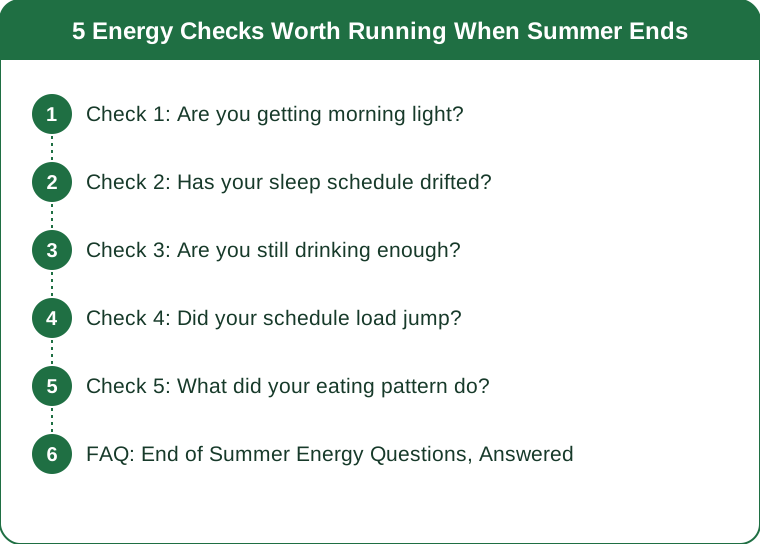
5 Energy Checks Worth Running When Summer Ends
Quick Answer: The end-of-summer energy dip usually has four common contributors: shifting light exposure, a sleep schedule that drifted later, dropped hydration as the weather cools, and a return to a full schedule after a loose one. Each has a check you can run in about a week, and running them in order finds the cause faster than changing everything at once.
Somewhere in the last two weeks of August, a lot of people notice they are more tired than the summer justifies. It is rarely one dramatic cause - it is several small ones arriving together, which is exactly why changing one thing at random rarely fixes it.

Check 1: Are you getting morning light?
This is the first check because it is the most common cause and the cheapest to test.
Daylight is already shortening noticeably by late August, and the change is fastest around the equinox - losing several minutes a day. Morning light is the strongest signal for circadian timing, and less of it, arriving later, pushes your internal clock later even when your alarm does not move.
The symptom pattern is specific: harder to wake, groggy for the first hour or two, more alert in the evening than you want to be, and worse sleep quality without obviously less sleep.
The test: get 10-20 minutes of outdoor light within an hour of waking, every day for a week. Outdoor, not through a window - even an overcast morning outdoors delivers far more light than a bright indoor room. Walk, drink coffee outside, take the long way to the train.
If grogginess improves within a week, that was it, and it is the easiest of the five to maintain permanently.
Check 2: Has your sleep schedule drifted?
Summer schedules loosen. Later sunsets, later social plans, and fewer fixed morning commitments let bedtime slide by an hour or more without anyone deciding to do it.
Then the schedule restarts, wake time snaps back, and bedtime does not - producing a stretch of genuine sleep restriction that most people do not label as such because no individual night felt short.
The test: track bedtime and wake time for a week. Not sleep quality, just the two numbers. Most people are surprised by the gap between what they think their bedtime is and what it actually is.
The fix: move bedtime earlier by 15 minutes every few days rather than an hour at once. A large jump means lying awake, which is discouraging enough that most people abandon it. Small increments hold.
And pair it with check 1 - morning light is what makes an earlier bedtime physiologically possible rather than just aspirational.
Check 3: Are you still drinking enough?
Thirst is a poor guide at the best of times and it gets worse as the weather cools.
In hot weather you feel thirsty, you carry water, and hydration takes care of itself. As temperatures drop, thirst sensation decreases, the water bottle stops coming along - and fluid needs do not fall proportionally, particularly if you are still training.
Mild dehydration produces exactly the symptoms people attribute to seasonal fatigue: low energy, headache, poor concentration, and a heavier feeling in workouts.
The test: track total fluid intake for three days, honestly. Include everything, and note whether the amount dropped as the weather did.
A quick proxy: urine color first thing is not reliable, but color during the middle of the day is reasonably informative - pale straw is fine, consistently dark is not.
This one takes only a few days to show a difference, which makes it worth running early even though it feels too simple to be the answer.

Check 4: Did your schedule load jump?
The return to a full calendar is a real increase in demand, and it lands all at once rather than gradually.
What changes is not just hours but decision density. A loose week has few required decisions; a full one reinstates dozens of small ones daily. That has a genuine cost even when nothing is difficult, and it shows up as tiredness rather than as stress.
The test: count committed hours in a typical week now versus a typical week in July. Include commuting, meetings, and anything with a fixed time. Most people find a jump of ten or more hours that they had not consciously registered.
The fix is not to do less - usually that is not available. It is to protect one genuinely unscheduled block in the week and to batch small decisions rather than spreading them. Laying out clothes, planning meals, and setting a default workout time all remove decisions rather than time.
Expect a two-week adjustment period as a normal part of any schedule change, and judge your energy after it rather than during it.
Check 5: What did your eating pattern do?
Summer eating tends to be lighter, more frequent, and more fruit and vegetable heavy. The return to a schedule often means fewer, larger, later meals - and frequently a skipped or minimal breakfast.
Two things commonly slip. Protein at breakfast, which is where most people’s intake starts, and total calories, which can quietly drop when meals are rushed and then get made up in a large late dinner that disrupts sleep.
The test: log food for three days without changing anything. Look specifically at breakfast protein and at how late the largest meal lands.
The two fixes worth making: get 25-30g of protein at breakfast, and move the largest meal earlier if it is currently landing within three hours of bed.
If you have run all five checks and the fatigue persists past a few weeks - or if it came on suddenly, comes with other symptoms, or is severe - that is a doctor’s appointment rather than a lifestyle adjustment. Thyroid issues, iron deficiency, and sleep apnea all present as unexplained fatigue and all are common and treatable. This is general information, not medical advice.
FAQ: End of Summer Energy Questions, Answered
How long should I run each check?
A week each for light and sleep, three days for hydration and food logging. Run them in order rather than simultaneously - changing everything at once tells you nothing about which one mattered.
Is seasonal fatigue a real thing or am I imagining it?
Seasonal changes in mood and energy are well documented and tied largely to light exposure. The late-August version is milder than winter seasonal affective disorder, and it responds to the same first intervention: more outdoor light, earlier in the day.
When should I see a doctor instead?
If fatigue is sudden, severe, lasts more than a few weeks despite good sleep, or comes with other symptoms like unexplained weight change, hair loss, breathlessness, or low mood. Those are worth investigating rather than troubleshooting at home.
TL;DR:
- Late-summer fatigue is usually several small causes stacking, not one big one.
- Run the checks in order: morning light, sleep timing drift, hydration, schedule load, then eating pattern.
- Morning outdoor light within an hour of waking is the highest-value single change.
- Persistent, sudden, or severe fatigue is a medical question, not a routine one.
One check at a time, a week each, and by the end of the month you will know which of the five was actually yours. That is far more useful than overhauling everything and never learning what worked.
Keep Reading
This article is for general informational purposes only and is not medical advice. It is not a substitute for professional diagnosis or treatment. Always consult a qualified healthcare provider about your individual situation, especially before making significant changes to your diet or exercise routine.