5 Energy-Draining Habits Hiding in a Completely Normal Workday
Quick Answer: Skipping morning sunlight, back-to-back meetings with no breaks, delayed lunch, constant notification-checking, and dehydration are five completely ordinary workday habits that quietly compound into afternoon fatigue — none look alarming individually, which is exactly why they’re so easy to overlook.
You didn’t do anything unusual today, and you’re still exhausted by 3pm. These five ordinary habits are the more likely explanation than something being wrong with you.

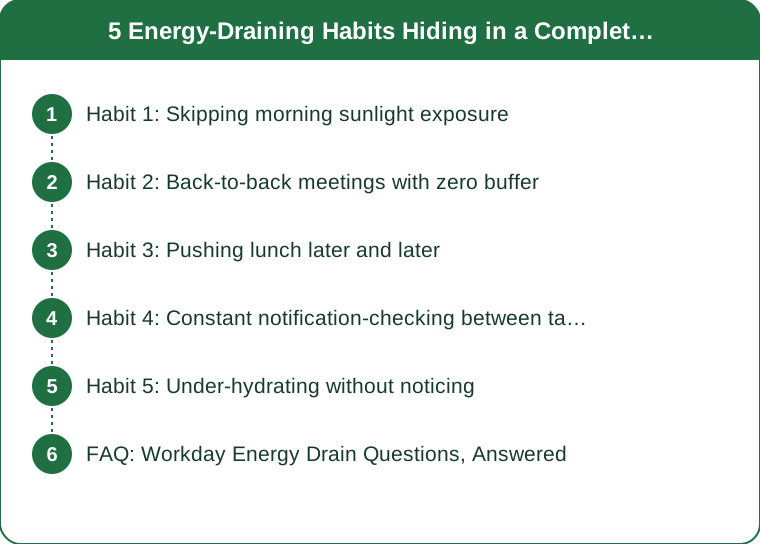
Habit 1: Skipping morning sunlight exposure
Going straight from bed to a screen-lit room delays your circadian rhythm’s morning cortisol signal, the natural alertness boost sunlight exposure normally triggers early in the day.
Even 5-10 minutes of natural light exposure within the first hour of waking measurably helps set this rhythm, versus relying entirely on artificial light and caffeine to substitute for it.
Habit 2: Back-to-back meetings with zero buffer
Constant context-switching between meetings without any recovery buffer taxes cognitive resources in a way that feels like mental fatigue rather than obvious tiredness, but produces a very similar drained feeling by mid-afternoon.
Even a 5-minute buffer between meetings to mentally reset measurably reduces this cumulative load.
Habit 3: Pushing lunch later and later
Delaying lunch past your body’s actual hunger signal often leads to a bigger blood sugar dip once you finally eat, followed by more pronounced post-meal fatigue than eating at a more consistent, earlier time would produce.
A delayed lunch isn’t ‘saving time’ — it’s often trading a smaller inconvenience now for a bigger energy crash later.

Habit 4: Constant notification-checking between tasks
Checking notifications reflexively between tasks fragments attention and adds a small but real cognitive cost each time, even when the notification itself takes two seconds to read — the switching cost, not the content, is what adds up across dozens of checks a day.
Habit 5: Under-hydrating without noticing
Mild dehydration, well before actual thirst kicks in, is associated with measurable drops in alertness and mood in research — an easy habit to fall into on a busy day, and one of the fastest fixable items on this list.
FAQ: Workday Energy Drain Questions, Answered
Which of these five habits makes the biggest difference if I can only fix one?
Morning sunlight exposure and lunch timing tend to have the most noticeable individual impact for most people, though the habits compound, so addressing more than one produces a bigger combined effect.
Is it realistic to fix all five in a busy job?
Start with the easiest wins — hydration and morning light take almost no extra time — before tackling harder structural changes like meeting buffers, which may require more negotiation with your calendar or team.
Could this level of fatigue be something more than these habits?
If fatigue persists despite addressing these common habits, it’s worth mentioning to a doctor, since persistent fatigue can have underlying causes beyond daily habits. This is general information, not medical advice.
TL;DR:
- Morning sunlight sets your circadian alertness rhythm for the day
- Back-to-back meetings without buffers add up to real cognitive fatigue
- Delayed lunch often trades a smaller inconvenience for a bigger energy crash
- Notification-checking and mild dehydration are small, fixable, compounding drains
This is general information, not medical advice — persistent fatigue despite these fixes is worth a conversation with your doctor.
Keep Reading
This article is for general informational purposes only and is not medical advice. It is not a substitute for professional diagnosis or treatment. Always consult a qualified healthcare provider about your individual situation, especially before making significant changes to your diet or exercise routine.