5 Two-Minute Resets for the Week the Mornings Get Dark
Quick Answer: When mornings go dark, your body clock loses the light signal it was using to wake up - and it drifts later while your alarm doesn’t. The five resets below each take about two minutes and all target the same thing: getting a strong light and movement signal in early, so the clock re-anchors. Do the first one within ten minutes of waking and it does most of the work on its own.
Nothing changed about your sleep. The sun just stopped being up when your alarm goes off.

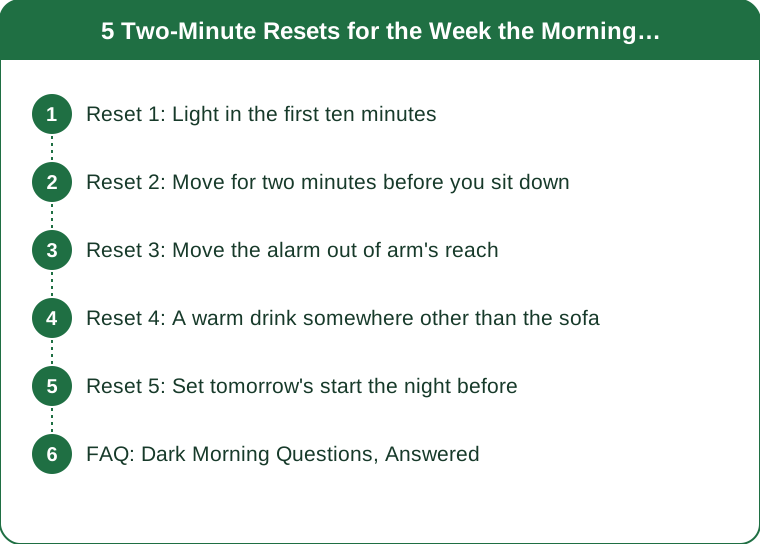
Reset 1: Light in the first ten minutes
What to do: Within ten minutes of waking, get to the brightest light available. Open every curtain, stand at a window for two minutes, or step outside if you can. If it’s genuinely dark, turn on the brightest lights in the house.
Why it works: your body clock is set primarily by light hitting your eyes, and it’s most responsive to light in the hours after you wake. Morning light pulls the clock earlier; evening light pushes it later. When the sun stops rising before your alarm, that morning signal disappears and the clock drifts.
Outdoor light is dramatically brighter than indoor light - even an overcast morning outside provides far more illumination than a well-lit room. Two minutes at a window beats twenty minutes under a ceiling light, and stepping outside beats both.
The practical version: open the curtains before you do anything else, and drink the first glass of water standing at the window rather than at the sink. You’re not adding a task - you’re relocating one you already do.
If your mornings are genuinely dark, a light therapy lamp used for 20-30 minutes while you eat or work is the established alternative, and it’s the intervention with the most evidence behind it for winter morning difficulty.
Reset 2: Move for two minutes before you sit down
What to do: Two minutes of any movement before the first sitting-down activity of the day. Ten squats, a lap of the house, a stretch sequence, going up and down the stairs twice. Not a workout - a signal.
Why it works: movement raises core body temperature and heart rate, both of which are part of the normal waking process. Your core temperature naturally rises as you wake and this is one of the signals your body uses to shift out of sleep mode - and dark mornings blunt it because you’re less likely to move around.
The specific problem this solves: on a dark morning, the sequence is usually alarm, phone, shower, sit down with coffee, sit down at a desk. There’s no point in that chain where your body gets a wake-up signal that isn’t caffeine.
Two minutes is genuinely enough. The goal is a temperature and alertness nudge, not a training effect - and setting the bar at two minutes is what makes it survive a bad week.
Stack it onto something existing: ten squats while the kettle boils, a stretch while the shower warms up. Habits attached to existing habits survive; standalone new habits mostly don’t.
Reset 3: Move the alarm out of arm’s reach
What to do: Put the phone or alarm across the room. Not on the bedside table.
Why it works: this is a behavioural fix for a specific dark-morning failure - the snooze cycle. Snoozing gives you fragmented, low-quality sleep in the last part of the night and frequently leaves you groggier than getting up at the first alarm would have.
Dark mornings make snoozing far more likely because there’s no light cue contradicting the impression that it’s still night. Removing the physical option is more reliable than deciding not to, particularly at 6.30am when your decision-making is at its worst.
The secondary benefit is the walk itself. Getting out of bed and crossing the room is a small piece of reset 2, delivered automatically.
And it addresses the phone problem. A phone within reach means the first thing your brain does is process notifications - which is a demanding cognitive task delivered before you’re awake, and one that reliably makes the first fifteen minutes feel worse.
Two minutes of setup, once. Then it works every morning without any further effort, which makes it the highest-leverage item on this list.

Reset 4: A warm drink somewhere other than the sofa
What to do: Have the first drink of the day standing, or sitting somewhere that isn’t where you’d normally settle. At a window, at the kitchen counter, on a doorstep.
Why it works: on a dark cold morning the strongest available pull is toward the warm, dim, comfortable place - and sitting down somewhere comfortable in low light in the first twenty minutes of the day works directly against waking up.
Location choice is doing more than it looks like. A window gives you the light from reset 1. Standing gives you a small piece of reset 2. You’re getting two of the five resets by choosing where to stand with a drink you were going to have anyway.
On the drink itself: water first is worth doing - overnight fluid loss is real and mild dehydration contributes to grogginess. Coffee after that is fine, and delaying it by even fifteen or twenty minutes is a change many people find helps, though the evidence for specific timing is more mixed than the internet suggests.
The thing to avoid is the horizontal-adjacent option: back into bed with a coffee, or straight onto the sofa under a blanket. Both are lovely and both extend the transition rather than completing it.
Reset 5: Set tomorrow’s start the night before
What to do: Two minutes before bed - clothes out, bag packed, kettle filled, curtains left open a crack if there’ll be any light. Whatever the first fifteen minutes of tomorrow requires, decide it now.
Why it works: the difficulty of a dark morning isn’t only physiological - a substantial part is that every small decision is harder when you’re half awake and it’s black outside. Removing the decisions removes most of the friction.
Leaving the curtains partly open matters more than it sounds. Even weak dawn light reaching you in the last part of your sleep contributes to the waking process, and it makes the alarm feel less abrupt. In genuinely dark months, a dawn-simulating alarm light does the same job artificially, and people who use them tend to be emphatic about them.
The evening half of the problem is also worth naming. Dark evenings pull bedtime later - more indoor light, more screen time, less reason to move. The morning is where the difficulty shows up and the evening is frequently where it’s created. Dimming lights in the last hour and holding a consistent bedtime does as much for a dark morning as anything you do at 7am.
Putting the five together: curtains open, two minutes of movement, alarm across the room, drink standing at the window, and two minutes of setup the night before. That’s about eight minutes of actual change and none of it requires waking up earlier.
When it’s more than seasonal: persistent low mood, significant changes in sleep or appetite, loss of interest in things you normally enjoy, or difficulty functioning that lasts more than a couple of weeks each autumn and winter is worth discussing with a doctor - seasonal affective disorder is a recognised condition with effective treatments, and it’s a different thing from finding dark mornings a bit harder. This is general information, not medical advice.
FAQ: Dark Morning Questions, Answered
Why is waking up harder now when my sleep hasn’t changed?
Your body clock relies on morning light to stay anchored. When the sun rises after your alarm, that signal disappears and the clock drifts later while the alarm stays put.
Do sunrise alarm clocks actually work?
Many people find them genuinely helpful, and the mechanism - gradual light before waking - is consistent with how light affects the body clock. They’re not a substitute for getting real light after you’re up.
Should I be getting more sleep in winter?
Some people naturally sleep slightly longer in darker months. The more common problem is bedtime drifting later while wake time stays fixed, which shortens sleep rather than lengthening it.
Is a light therapy lamp worth it?
For people who struggle significantly with dark mornings, they’re the intervention with the most evidence behind them. Used for 20-30 minutes in the morning, and worth discussing with a doctor if low mood is part of the picture.
TL;DR:
- Dark mornings remove the light signal your body clock uses to wake, so it drifts later
- Get to the brightest available light within ten minutes - two minutes at a window beats twenty under a lamp
- Two minutes of movement before you sit down anywhere
- Alarm across the room; the snooze cycle is worse than the extra nine minutes is good
- Set up the first fifteen minutes the night before, and leave the curtains cracked
About eight minutes of change, and none of it involves waking up earlier.
Keep Reading
This article is for general informational purposes only and is not medical advice. It is not a substitute for professional diagnosis or treatment. Always consult a qualified healthcare provider about your individual situation, especially before making significant changes to your diet or exercise routine.