The 2am Wakeup That Isn't Insomnia: Why You Fall Asleep Fine but Can't Stay Asleep
Quick Answer: If you fall asleep easily but wake at roughly the same hour every night, that’s sleep-maintenance disruption, not classic insomnia — and it has different causes. The usual suspects: an overnight blood sugar dip, a cortisol rise shifting earlier, alcohol disrupting the second half of the night, fluids too close to bedtime, or a consistent environmental trigger. The racing mind you notice on waking is usually a reaction to being awake, not the reason you woke. Track it for two weeks and the pattern usually names itself. (General information, not medical advice.)
You fall asleep in under ten minutes. No trouble at all. And then at 2:07am you are wide awake, mind fully operational, running an audit of a conversation from 2019.
Then you google it and get the same advice you’ve already followed: no screens, no late coffee, dark room. All of which is aimed at falling asleep — the one part you’re doing perfectly.

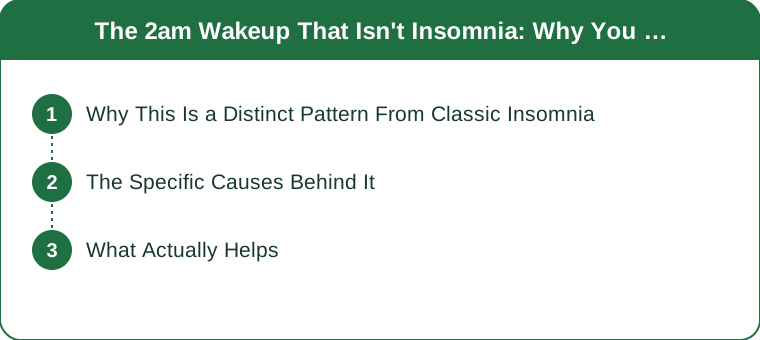
Why is waking at 2am different from insomnia?
Because the mechanism is different, and so is the fix.
Sleep onset isn’t the problem. Difficulty falling asleep is the hallmark of classic sleep-onset insomnia. You don’t have that. Whatever is waking you is acting hours after you’ve gone under — which rules out most of what standard sleep hygiene targets.
The consistent timing is a real clue. Waking randomly at 1am, then 4am, then 3am suggests generalized poor sleep. Waking at close to the same hour night after night points at something with its own schedule — a physiological rhythm, a metabolic dip, or something external.
It’s happening at a vulnerable point in the cycle. Sleep runs in roughly 90-minute cycles, and between cycles there’s a natural lightening where waking is biologically easy. Everyone surfaces briefly several times a night; most people don’t notice. Your 2am is a normal transition that something is turning into a full wake-up.
The racing mind is downstream, not upstream. This one matters, because it’s easy to conclude you’re waking from anxiety. Usually you’re waking for a physical reason, and then your brain — finding itself awake in the dark with nothing to do — starts producing content. The thoughts are a symptom of being awake, not the cause of it.
And generic advice was built for a different problem. Blue light and afternoon caffeine mostly affect sleep onset. Aiming them at a mid-sleep wake-up is why nothing has worked yet.

What actually causes a middle-of-the-night wake-up?
Five common drivers. Most people recognize theirs immediately.
1. An overnight blood sugar dip. After a dinner heavy in refined carbs — or a very long gap without eating — blood sugar can fall in the early hours, and the body responds by releasing stress hormones. Those hormones do exactly what you’d expect: they wake you up. Classic tells are waking hungry, slightly sweaty, or with a thumping heart.
2. Cortisol shifting earlier. Your cortisol naturally rises toward morning to help you wake. Under chronic stress or irregular schedules, that rise can drift earlier — producing an alertness spike at 2 or 3am that feels exactly like being switched on. If you wake wide awake and alert rather than groggy, this is a strong candidate.
3. Alcohol, specifically in the second half of the night. Alcohol is sedating at first — which is why it seems to help — and then, as it’s metabolized, it fragments the back half of sleep. This is a well-documented and very consistent pattern. Two glasses of wine at 8pm reliably produces a 3am wake-up in a lot of people.
4. Bladder and fluid timing. Sometimes the answer is embarrassingly plain. But note what happens next: a simple physical wake-up becomes a 90-minute mental spiral, and the spiral is what you remember.
5. A consistent environmental trigger. A partner’s shift schedule, a neighbor, a heating system cycling off, a temperature drop, a streetlight on a timer, a pet. If the timing is uncannily precise — 2:15 every night — look hard here first.
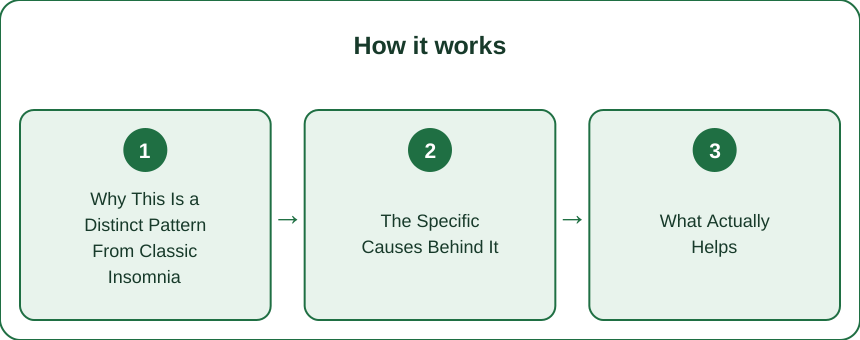
What actually helps?
Target the cause rather than layering on more sleep hygiene.
Fix dinner composition and timing. Include protein and fiber at dinner rather than refined carbs alone, and avoid an extremely long overnight fasting gap. If you suspect blood sugar, a small protein-containing snack an hour before bed — a few nuts, yogurt, cheese — is a cheap two-week experiment.
Move alcohol earlier, or reduce it. Timing matters as much as amount. A drink with dinner at 6pm disrupts far less than the same drink at 10pm. If you drink most evenings, a one-week break is the single most informative test you can run.
Taper fluids in the last hour or two — don’t restrict your overall daily hydration, just front-load it.
Have a pre-decided response ready. This is the highest-value habit on the list, because it stops a five-minute wake-up becoming a two-hour one:
- Don’t check the time. Knowing it’s 2:41 activates the math about how much sleep is left, and the math is activating.
- Don’t reach for your phone.
- Do slow breathing with a longer exhale than inhale for a few minutes.
- If you’re still awake after about 20 minutes, get up, sit somewhere dim and do something boring until you feel sleepy, then return to bed. Lying there frustrated teaches your brain to associate the bed with being awake.
Track it for two weeks. A note on your phone: wake time, what you ate at dinner and when, alcohol, room temperature, stress level. Almost everyone finds a correlation within a fortnight — and your own data beats any general list, including this one.
Myth vs Fact
Myth: Waking at night means you have insomnia. Fact: Brief awakenings between sleep cycles are normal and near-universal. The problem isn’t waking; it’s staying awake afterward.
Myth: A nightcap helps you sleep. Fact: It helps you fall asleep and reliably damages the second half of the night. That’s the exact trade you don’t want if 2am is your problem.
Myth: Waking up means you didn’t get enough deep sleep. Fact: Most deep sleep occurs in the first half of the night, so a 2am wake-up typically comes after you’ve banked the bulk of it. Reassuring, and worth knowing at 2am.
Myth: You should stay in bed and try harder to fall back asleep. Fact: After about 20 minutes, getting up briefly is the better move. Effort is the opposite of sleepiness.
Mini FAQ
Why do I wake up at 2am every night for no reason?
There’s almost always a reason — it’s just not visible from inside the wake-up. The most common are an overnight blood sugar dip, alcohol wearing off, an early cortisol rise, or a recurring environmental trigger. The very consistency of the timing is your best diagnostic clue, which is why a two-week log usually identifies it.
Is it normal to wake up in the middle of the night?
Yes. Brief awakenings between sleep cycles happen to everyone, several times a night — most go unremembered. Sleep in two segments was also historically common. What’s worth addressing is a wake-up that regularly lasts 30+ minutes or leaves you unrested the next day.
When should I see a professional?
Talk to a doctor if it happens most nights for more than a month, if you’re significantly tired during the day, or if there’s snoring, gasping, or a partner noticing pauses in your breathing — sleep apnea very commonly presents as unexplained night waking. Also worth checking: night sweats, perimenopause symptoms, reflux, thyroid issues, and any medication you take in the evening.
TL;DR:
- Falling asleep fine but waking at a fixed hour is sleep-maintenance disruption, not onset insomnia.
- Consistent timing = a specific trigger, not general poor sleep.
- Top causes: blood sugar dip, early cortisol rise, alcohol, fluids, environment.
- The racing mind is a reaction to being awake, not the cause.
- Fixes: protein + fiber at dinner, alcohol earlier, taper fluids, don’t check the clock.
- Still awake after 20 minutes? Get up, stay dim and dull, return when sleepy.
- Log it for two weeks — the pattern names itself.
This is general information, not medical advice.
Keep Reading
This article is for general informational purposes only and is not medical advice. It is not a substitute for professional diagnosis or treatment. Always consult a qualified healthcare provider about your individual situation, especially before making significant changes to your diet or exercise routine.