The Walking Meeting: Turning Calendar Blocks Into Movement
The calendar is where movement goes to die — unless the meetings themselves start moving. The walking meeting converts existing calendar blocks into daily kilometers, and the research says the ideas improve along with the step count. The professional’s guide.

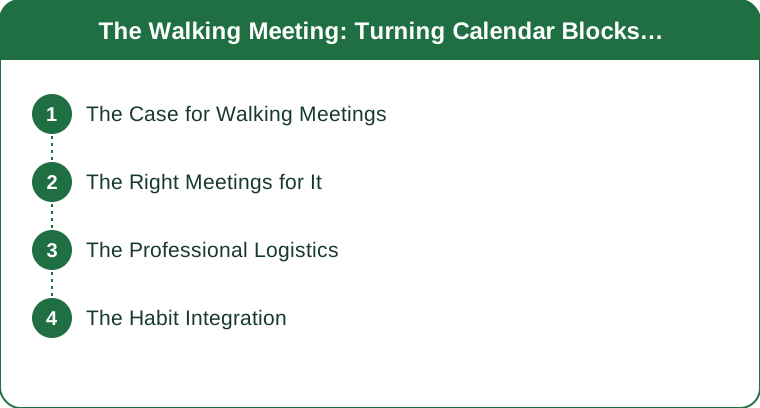
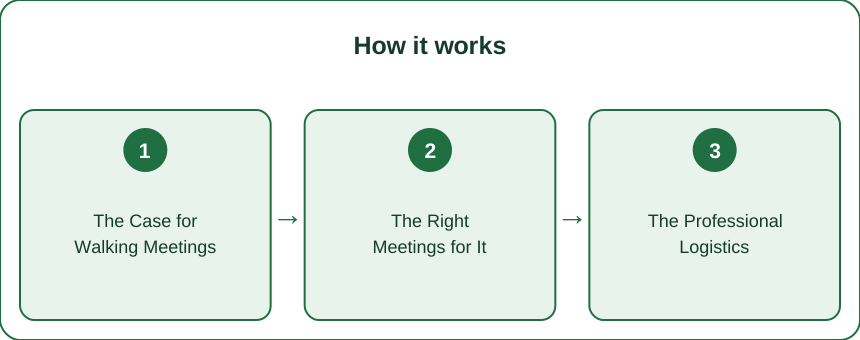
The Case for Walking Meetings
The evidence file: walking measurably boosts creative thinking (the famous Stanford finding — creative output jumps during and after walking; the brainstorm is literally better on foot), the conversation dynamics improve (side-by-side talking lowers social friction — hard conversations often go easier without the across-the-table stare; therapists and managers both discovered this independently), and the math is free (three walking calls a week converts dead calendar time into genuine activity — the exercise-snacks doctrine at meeting scale).
The Right Meetings for It
The selection filter: one-on-ones lead (the check-in, the mentoring chat, the catch-up — dialogue walks well), brainstorms and problem-solving second (the creativity research’s home turf), phone-and-audio calls are the easy tier (nobody needs you on camera — the headphone walk is invisible professionalism), and the wrong candidates (document-review sessions, presentations, anything needing screens or more than three people — the walking meeting is a duet format, occasionally a trio).

The Professional Logistics
Making it seamless: the route standard (a known loop matching the meeting length — the 30-minute loop and the 15-minute block; dead-end wandering distracts), the audio kit (earbuds with a decent mic and the wind-noise awareness — the one technical failure that reads unprofessional; sheltered routes on breezy days), the note-taking answer (voice memos and the post-walk two-minute summary — or the walking-partner split: one walks, one keyboards, roles rotate), and the invitation etiquette (frame it as an offer — ‘up for a walking one-on-one?’ — and keep the seated option gracious; not every knee, outfit or day walks).
The Habit Integration
Building it into the week: the standing-slot approach (the recurring Tuesday one-on-one becomes the recurring walking one — habit by calendar default), the solo version counts (the thinking-walk before a big decision is a walking meeting with yourself — schedule it like one), the weather policy (the rain plan is the phone-call-from-a-covered-loop or the honest reschedule — a policy beats a cancellation), and the compound payoff (three walking meetings weekly ≈ 90 extra active minutes plus measurably better conversations — the rare productivity hack that’s also a health intervention). The calendar was the obstacle; now it’s the training plan.
One-on-ones on foot, known loops, decent mic, offer don’t impose. The walking meeting turns the calendar from enemy to equipment — better ideas at three kilometers an hour.
Keep Reading
This article is for general informational purposes only and is not medical advice. It is not a substitute for professional diagnosis or treatment. Always consult a qualified healthcare provider about your individual situation, especially before making significant changes to your diet or exercise routine.