Why Are You Still Tired After a Full 8 Hours of Sleep? 4 Reasons That Aren't 'Just Sleep More'
Quick Answer: Feeling exhausted despite 8 hours usually points to sleep quality issues — fragmented sleep cycles, a mistimed wake window, low iron or vitamin D, or dehydration — rather than needing more total hours. Sleep tracking (even basic phone apps) can reveal which one applies to you.
You did everything ‘right’ — in bed by 10:30, up at 6:30, a clean 8 hours on paper. And yet by 10am you’re dragging like you pulled an all-nighter. The number of hours is only part of the sleep equation, and it’s usually not the part that’s broken.

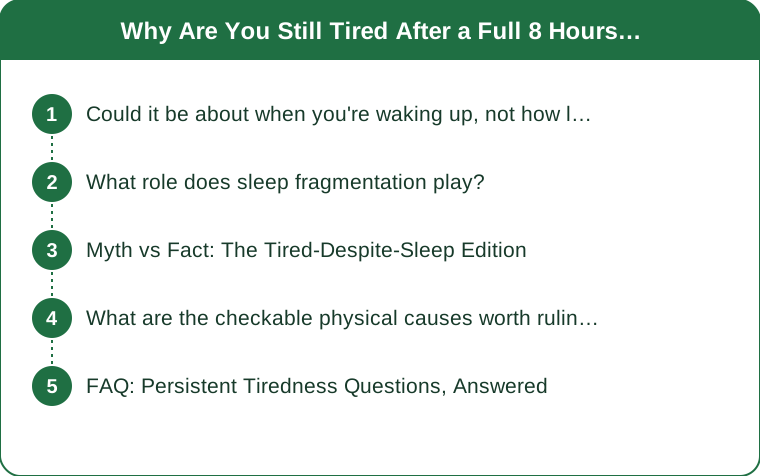
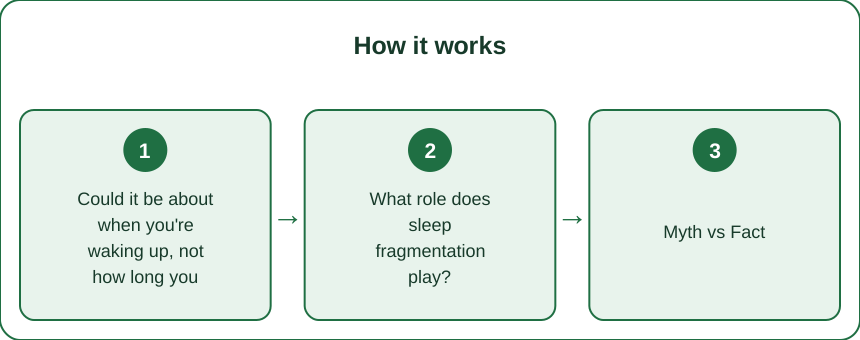
Could it be about when you’re waking up, not how long you slept?
Very likely. Sleep moves through 90-minute cycles of light, deep, and REM sleep. Waking up in the middle of a deep sleep phase — even after a technically full 8 hours — produces a groggy, heavy feeling called sleep inertia that can last 30-60 minutes or color your whole morning.
Try adjusting your total sleep time to land on a multiple of 90 minutes (7.5 hours or 9 hours instead of 8) and waking naturally a few days in a row to see if grogginess improves — this costs nothing to test.
What role does sleep fragmentation play?
A huge one, and it’s invisible without tracking. Micro-wakeups — brief arousals from noise, a partner moving, or mild sleep apnea — can happen dozens of times a night without you remembering any of them the next morning.
Each fragment interrupts the deep and REM sleep that’s actually restorative, so your ‘8 hours’ on paper might functionally be closer to 5-6 hours of continuous, useful sleep. A basic sleep tracker (phone-based or wearable) can flag this pattern even if it’s not clinically precise.

Myth vs Fact: The Tired-Despite-Sleep Edition
Myth: If you slept 8 hours, tiredness must be mental/motivational. Fact: Iron deficiency, low vitamin D, thyroid issues, and dehydration are all common, physical, checkable causes of persistent fatigue that coexist with normal sleep duration.
Myth: Naps mean your night sleep ‘failed.’ Fact: A short nap (20 minutes) can be a reasonable tool, not proof of failure — though relying on daily naps to function is worth investigating further.
Myth: More sleep always fixes tiredness. Fact: Past your body’s actual need (usually 7-9 hours for adults), extra time in bed can increase grogginess by extending time in light, less-restorative sleep stages.
What are the checkable physical causes worth ruling out?
In rough order of how commonly they’re the actual answer:
- Iron deficiency (even without full-blown anemia) — very common, especially with heavier periods, and directly causes fatigue
- Vitamin D deficiency — widespread, easy blood test, easy fix if low
- Dehydration — even 1-2% body weight in fluid loss measurably affects energy and cognition
- Thyroid function — both hypo- and hyperthyroid can disrupt energy and sleep quality
- Sleep apnea — worth raising with a doctor if you snore, wake gasping, or a partner notices breathing pauses
FAQ: Persistent Tiredness Questions, Answered
How do I know if it’s sleep quality vs. a health issue?
If adjusting wake timing and sleep environment for 1-2 weeks doesn’t help at all, that’s a reasonable point to get bloodwork (iron, vitamin D, thyroid) rather than continuing to tweak sleep habits alone.
Does room temperature really affect sleep quality?
Yes — most people sleep most restoratively around 65-68°F (18-20°C). A too-warm room is one of the most common, most fixable causes of fragmented sleep.
Is it normal to need more sleep some weeks than others?
Yes — illness, stress, intense exercise, and hormonal cycles all genuinely increase sleep need temporarily. This is general information, not medical advice — persistent unexplained fatigue is worth a doctor visit.
TL;DR:
- 8 hours isn’t automatically restorative — waking mid-cycle causes grogginess independent of total time
- Fragmented sleep (micro-wakeups) can cut your effective restorative sleep well below the hours logged
- Iron, vitamin D, dehydration, and thyroid function are common physical causes worth checking
- If habit changes don’t help within 2 weeks, bloodwork is the next reasonable step
This is general information, not medical advice — but tracking your wake timing for a week is a free first experiment before anything else.
Keep Reading
This article is for general informational purposes only and is not medical advice. It is not a substitute for professional diagnosis or treatment. Always consult a qualified healthcare provider about your individual situation, especially before making significant changes to your diet or exercise routine.